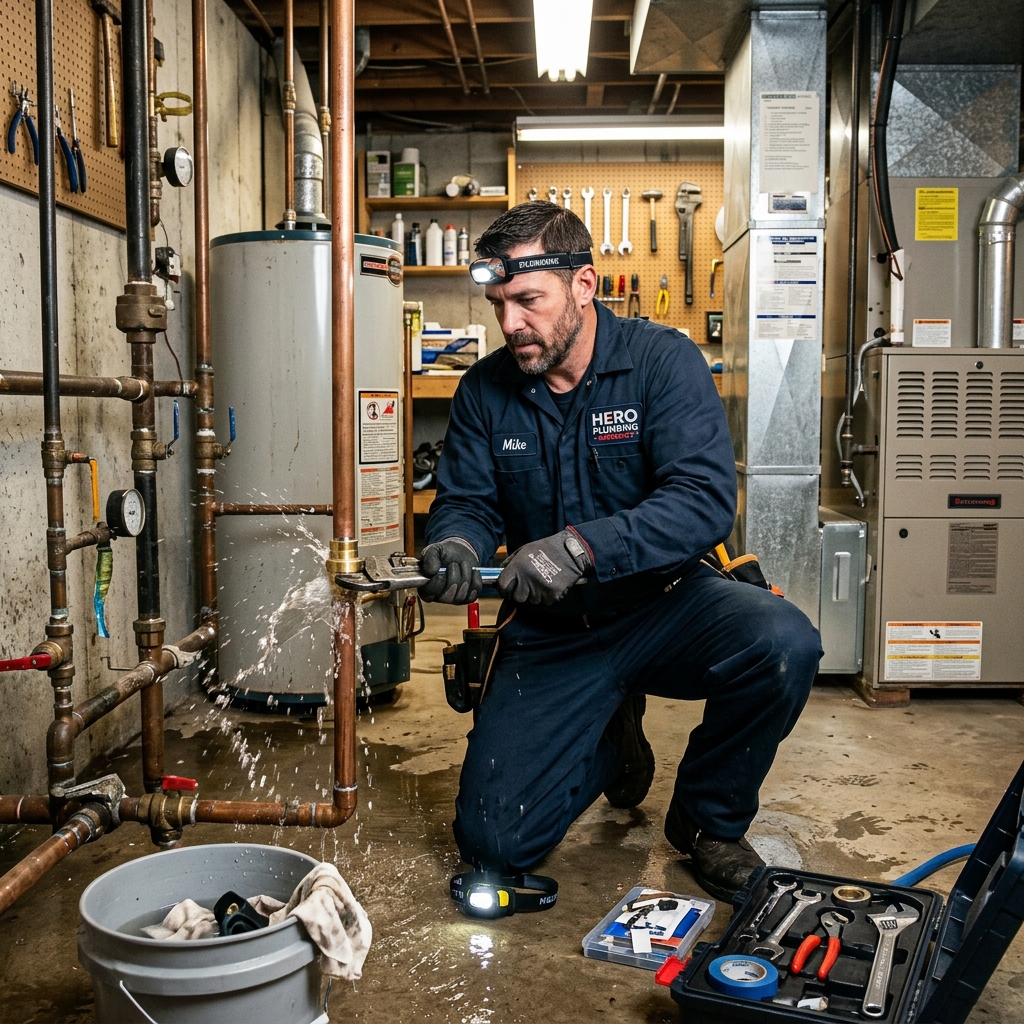
A sudden plumbing crisis can be terrifying. Seeing water flooding your hallway or sewage backing up into your bathroom can induce immediate panic. During these stressful moments, knowing exactly what steps to take can prevent thousands of dollars in water damage and restore safety to your home.
In this guide, we provide a clear, step-by-step action plan to contain a plumbing crisis while you wait for a technician to arrive. Remember, when water is actively spreading, fast action is your best defense. If you need immediate assistance, our 24/7 dispatchers are ready to send a certified emergency plumber in Coral Gables to your door.
Step 1: Shut Off the Water Supply Immediately
The absolute first priority in any flooding scenario is to stop the flow of water. If you can stop the water source, you contain the damage immediately.
- Localized Shutoff Valves: If the leak is isolated to a specific fixture (like a toilet, sink, or washing machine), look behind or underneath the unit. You will find a small metal valve on the supply line. Turn this valve clockwise until it stops tight to cut water to that fixture.
- Main Shutoff Valve: If you cannot locate the source of the leak, or if a pipe has burst inside a wall, you must shut off the water supply to the entire house. In Coral Gables, the main shutoff valve is usually located outdoors, near your front garden hose bibb, or inside a green plastic utility box near the street curb. Turn the lever 90 degrees or rotate the gate wheel clockwise to turn off all incoming water.
Step 2: Turn Off Your Water Heater
Once you cut off the main water line to your house, your water heater will stop receiving cold water. If the heater remains powered on, pressure can build up inside the tank, or the electrical heating elements can overheat and burn out.
- Electric Heaters: Go to your home's main electrical breaker panel and turn off the breaker labeled "Water Heater."
- Gas Heaters: Locate the thermostat control dial on the front of the heater tank and turn it to the "Pilot" or "Off" position, and shut off the gas valve on the yellow supply pipe.
Step 3: Drain the System Pipes
Even after turning off the main water valve, water will still remain trapped inside your home's pipes. To drain this water safely away from the leak site, go to the lowest outdoor faucet (garden hose bibb) on your property and open it fully. Also, open one or two faucets inside the house (such as a kitchen sink) to allow air into the pipes, helping the remaining water drain out quickly.
Step 4: Contain and Clean Up Excess Water
While waiting for the emergency plumber to arrive, do what you can to protect your property:
- Place buckets, pots, or towels under active drips to catch falling water.
- Move area rugs, furniture, electronics, and valuables out of the wet area immediately.
- If the flooding is extensive, use a wet-dry vacuum to suck up standing water from carpets and tile floors. Open windows and turn on fans to start drying out the space, preventing mold growth.
- Safety Warning: If standing water has reached electrical outlets or your home's breaker panel, do not enter the flooded room. Cut power to the area from the main panel if it is safe to access, or wait for utility experts and your plumber to handle the situation.
Step 5: Call a Local Emergency Plumber
Once you have stabilized the water flow, contact a local plumbing service that operates 24/7. Avoid companies that redirect you to an automated machine; instead, look for a service with live coordinators who can confirm that a technician is actively on their way.
Having a reliable emergency plan and knowing the location of your main shutoff valve are essential parts of responsible home ownership. Keep our number handy, and don't hesitate to call if you face a plumbing crisis.