The main sewer line is the single most critical and hard-working pipe in your home's entire plumbing system. Hidden deep underground, it is responsible for carrying all of your household wastewater safely away to the municipal sewer system. Because it is out of sight, it is often out of mind—until a catastrophic backup floods your home with sewage.
Understanding how to identify early warning signs of sewer line deterioration and practicing basic preventative care can save you from a major plumbing disaster. In this guide, we discuss sewer line maintenance, common failures, and how modern sewer line repair and replacement in Coral Gables is handled non-invasively.
Warning Signs of a Failing Sewer Line
Sewer lines rarely collapse or block completely overnight. In most cases, they exhibit subtle symptoms for weeks before a total backup occurs:
- Chronic, Multi-Fixture Backups: If a single sink is clogged, the issue is local. But if your toilets, showers, and laundry drains are all backing up or gurgling simultaneously, the blockage is in the main sewer line.
- Gurgling Sounds: If you hear gurgling or bubbling noises coming from your toilet bowl when you run water in the sink or when your washing machine drains, air is trapped inside the main sewer line due to a restriction.
- Foul Odors: A functional sewer system is sealed. If you smell a persistent sewer gas odor inside your home or around your yard, it indicates a crack or opening in the sewer pipe.
- Unusually Lush, Wet Spots in the Lawn: A cracked sewer line leaks nutrient-rich wastewater into the surrounding soil. This acts as fertilizer, creating a soggy, sunken, or unusually bright green patch of grass directly above the pipe.
The Primary Threat: Tree Root Intrusion
The most common cause of sewer line failure in Coral Gables is tree root intrusion. Our banyan trees and mature live oaks have massive, aggressive root systems that spread wide in search of moisture and nutrients.
Underground sewer pipes carry warm water containing moisture and phosphates. If your home has older clay, cast iron, or orangeburg sewer pipes, tiny cracks or loose joints can develop. Roots sense the moisture, penetrate the joint, and feed on the wastewater. Once inside, the roots grow rapidly into a dense, fibrous root ball that catches toilet paper and grease, completely blocking the flow.
Preventative Sewer Line Maintenance
You can protect your sewer line and extend its life by practicing simple maintenance:
- Avoid Flushing Wastes: Never flush wet wipes, paper towels, grease, feminine products, or dental floss. These materials snag on root intrusions and accelerate blockages.
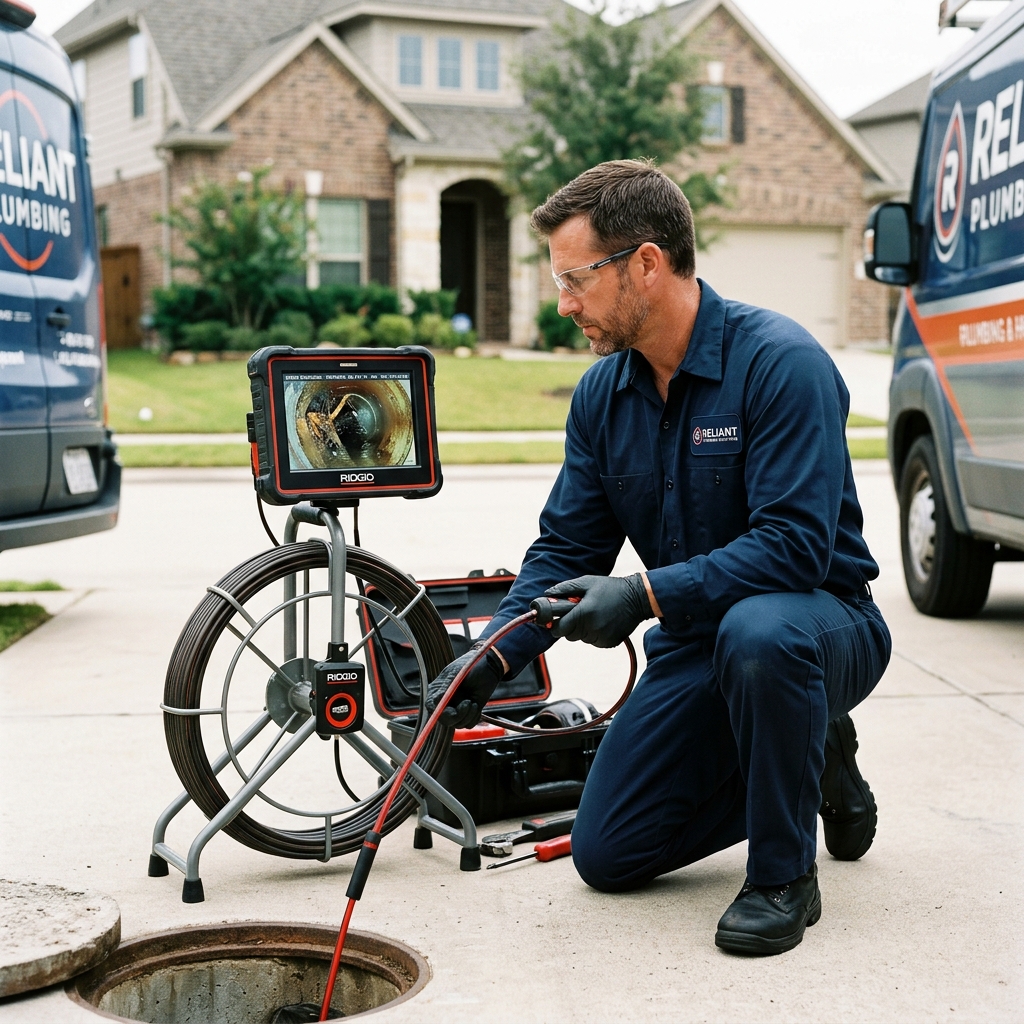
- Schedule Regular Camera Inspections: If your home was built before 1980 and has mature trees nearby, have a plumber run a fiber-optic sewer camera down your cleanout once every 2 to 3 years to catch root intrusion early.
- Hydro-Jetting: If minor root intrusion is found, hydro-jetting can blast the roots away and clear the pipe walls without digging, keeping the system clear.
Modern Trenchless Sewer Repair
If your sewer line is cracked or root-damaged, you no longer have to worry about a massive trench being dug across your beautiful lawn or driveway. Modern trenchless pipe lining allows us to insert a flexible, epoxy-saturated sleeve inside your old pipe from a single access point. Once inflated and cured, it creates a seamless, durable plastic pipe inside the old one, restoring flow with zero excavation.
If you are experiencing slow drains or suspect a sewer line issue, contact our team. We provide high-definition camera diagnostics and advanced trenchless solutions to resolve the issue with minimal disruption to your home.