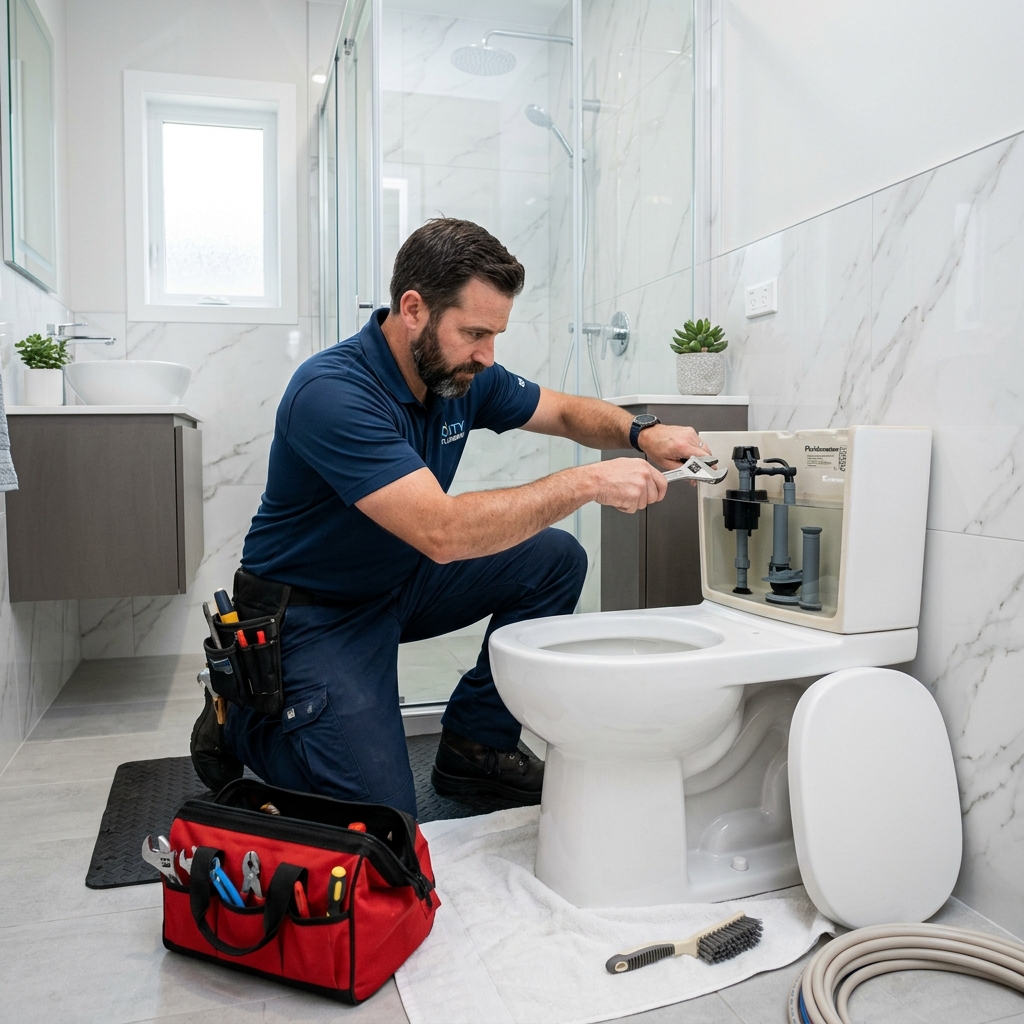
A toilet is one of the most frequently used fixtures in any household. When it functions correctly, it is easily ignored. But when it begins to run continuously, leak, or clog, it can quickly become a major source of stress and water waste.
Fortunately, many common toilet issues are caused by simple mechanical parts inside the tank that wear out over time. In this guide, we explain how to troubleshoot the most frequent toilet problems and how to tell if it is time to call a professional for a toilet repair or installation in Coral Gables.
Problem 1: The Toilet Runs Continuously
A toilet that "runs" water long after it has been flushed is a massive source of water waste, capable of adding hundreds of dollars to your quarterly utility bill. This issue is usually caused by one of two parts inside the tank:
- The Flapper Valve: The flapper is the rubber seal at the bottom of the tank that lifts when you push the flush handle. Over time, the rubber degrades, becomes stiff, or accumulates mineral deposits, preventing it from sealing tightly against the flush valve seat. Water then leaks continuously from the tank into the bowl. Replacing a worn flapper is a simple and inexpensive fix.
- The Fill Valve & Float: The fill valve refills the tank after a flush. A float ball or cup rises with the water level, shutting off the valve when the tank is full. If the float is set too high, the water level will rise past the top of the overflow tube and drain continuously into the bowl. You can adjust the float screw to lower the water level.
Problem 2: A Weak or Incomplete Flush
If your toilet requires multiple flushes to clear the bowl, or if the flush feels weak, the issue may be related to water volume or mineral build-up:
- Check the water level inside the tank. It should sit about 1/2 inch below the top of the overflow tube. If it is lower, adjust the float to allow more water to fill the tank.
- Check the flapper chain. If the chain is too loose, pushing the handle won't lift the flapper fully, and the water will drain out too slowly. Adjust the chain clip so there is only a tiny bit of slack.
- In South Florida, high mineral content in tap water can clog the small siphon jet holes located under the rim of the toilet bowl. You can clear these holes using a wire coat hanger or stiff brush to restore full siphon flushing power.
Problem 3: Water Leaks Around the Base
If you notice water pooling on the floor around the bottom of the toilet bowl, this is a serious concern. This water contains sewer bacteria and can quickly rot the wooden subfloor beneath your tile.
- The most common cause of base leaks is a failed wax ring seal. The toilet sits on a wax ring that seals it to the sewer flange. If the toilet is loose or wobbles, the movement tears the wax seal, allowing water to escape during a flush.
- To resolve this, the toilet must be disconnected, lifted off the floor, the old wax scraped away, a new wax ring installed, and the toilet bolted back down securely. This is a task best left to a professional plumber to ensure a leak-free seal.
If troubleshooting doesn't solve your toilet issues, or if you are looking to upgrade to a modern comfort-height, high-efficiency model, contact our team. We provide prompt service and professional pricing for all toilet repairs and installations.